Real Estate, reimagined — EHRET+CIE launches as a development partnership
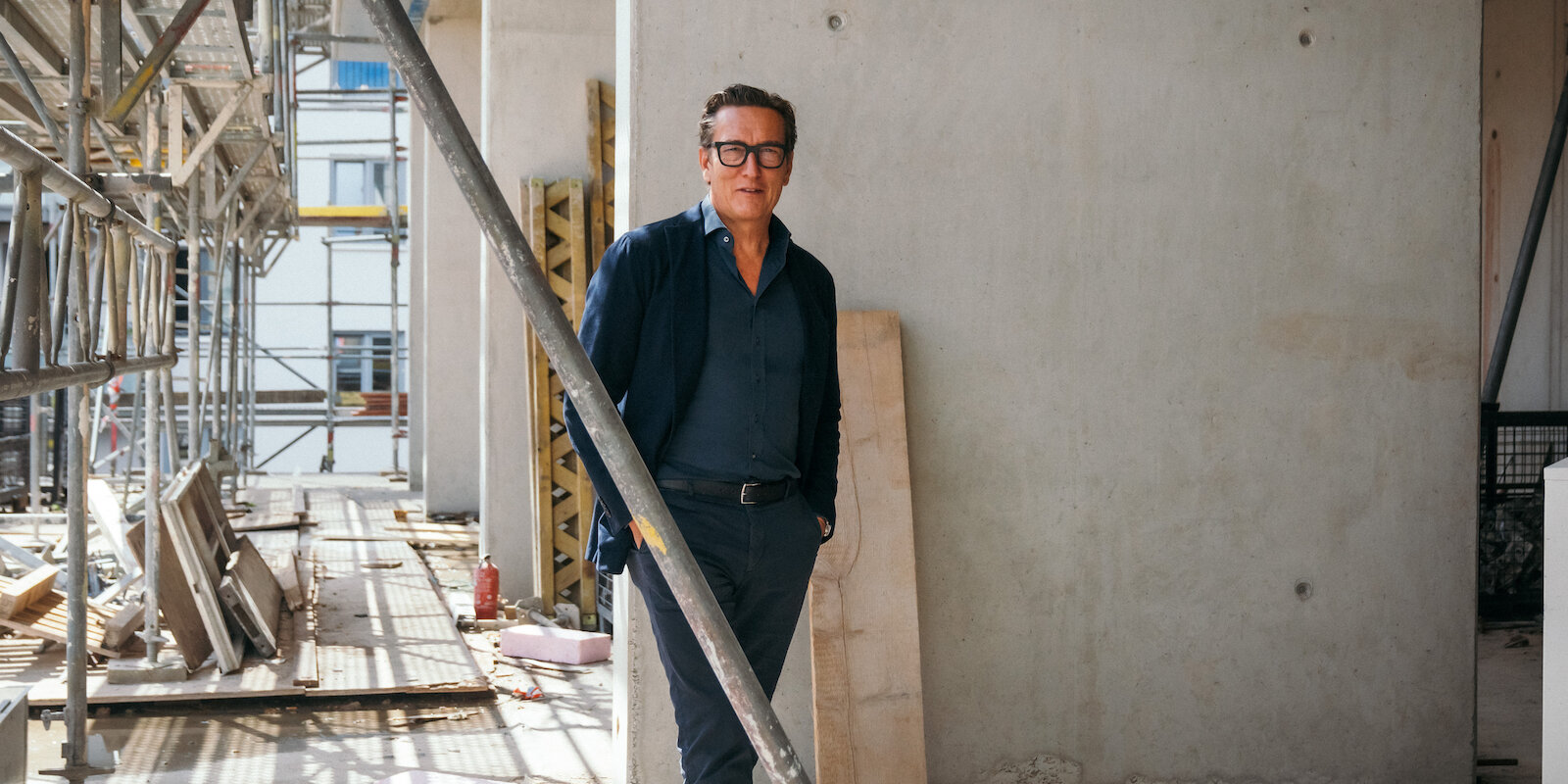
Fresh momentum for the real estate world: with EHRET+CIE, Michael Ehret is founding a new company for the development and repositioning of complex real estate projects. The company addresses owners, investors, and family offices. Its initial focus is Munich and the wider metropolitan region. Depending on the task, EHRET+CIE takes on an advisory, curatorial, steering, or entrepreneurial role — from the first analysis and use concept, through economic structuring, all the way to realization and the transition into operation.
Many real estate projects today face a fundamental reassessment. Changed financing conditions, more differentiated demand, and new requirements for use and flexibility are calling existing development models into question. Often, adjusting individual levers isn't enough. What's needed is a fresh look at the project as a whole: its potential, its use, its economic structure, the actors involved, and its long-term operation. EHRET+CIE responds to these demands with an integrated development approach:
Three fields, one cycle
EHRET+CIE's offering spans three closely interlocking fields: advisory services, project development, and strategic research.
Advisory services are aimed at owners, investors, and project partners who develop on their own but need an experienced, entrepreneurially minded partner at key decision points. This includes location and potential analyses, developing viable use concepts, economic and financial structuring, project organization, and engaging municipalities, neighborhoods, and other stakeholders. Advisory work here isn't limited to recommendations. EHRET+CIE accompanies implementation and takes on shared responsibility for the project's viability.
In project development, responsibility spans from the feasibility study all the way to ongoing operation. Use, economics, planning, and realization are not treated as separate tasks — they influence one another and must be considered together from the very start.
Strategic research complements these two fields. In dialogue with academia, policy, and practice, EHRET+CIE investigates new models for planning, use, and development. The insights gained flow back into advisory work and project development, while experience from implementation, in turn, feeds further research. This creates a cycle between thinking and doing.
From potential to an actionable project
EHRET+CIE steps in particularly where development isn't progressing as planned: when projects stall, when existing use concepts no longer hold up under changed conditions, or when the potential of a site or existing building hasn't yet translated into an actionable project. In such situations, the company reconsiders the fundamentals of development — from use, to economic structure, to project organization.
EHRET+CIE sees itself as a waymaker. The term "enablement" captures the core task: finding a viable use, creating a resilient structure, and bringing the parties involved together. The goal is to curate places with courage — unlocking the value already latent in a site, an existing building, or a district, and turning it into a project ready for investment and implementation.
The starting point is the talent of the place. From it emerges a use hypothesis, which is tested early with the relevant stakeholders and refined in loops. The benchmark remains Human Proof: a project must prove itself for the people who live, work, or invest in it — while also remaining economically viable in the long run.
A project only succeeds once it still benefits a city decades later. This is the standard EHRET+CIE wants to be measured by: districts that work in everyday life, investments with lasting substance, and places that are more than the sum of their floor space.
How this approach is changing urban development — and why project development today must be thought through more from the standpoint of enabling — is explored further in the article "Urban Development Needs Waymakers."